

Build a product validation process that works. A practical guide to validating user ideas early so you ship features customers actually want.

We’ve all been in the position of watching our product engineers finish up their current project without any idea of what to work on next. This can grind development to a stop and create stress for you and your team. If this happens regularly in your organization, now is the time to set up a repeatable ideation process that helps your team come up with new ideas consistently so your engineers can work without hiccups or pauses.
To add predictability to an otherwise murky process, create a structured procedure for your team to follow. That’s how we did it at UserVoice, and it allowed us to innovate and deliver the best product possible.
Whether we’re developing new product features or an entirely new product like UserVoice Validation, we follow a process for brainstorming.
Ideas can come from anywhere inside and outside of your company, and it’s not uncommon for them to change and adapt as you go through the development process. In our case, the original idea for UserVoice Validation came from user feedback suggesting that our customers needed a tool that would allow product teams to publicly share what they’re working on.
We started creating something akin to a public roadmap, but after several rounds of validating our ideas and iterating based on feedback, we ended up developing a tool to help product teams validate new product features.
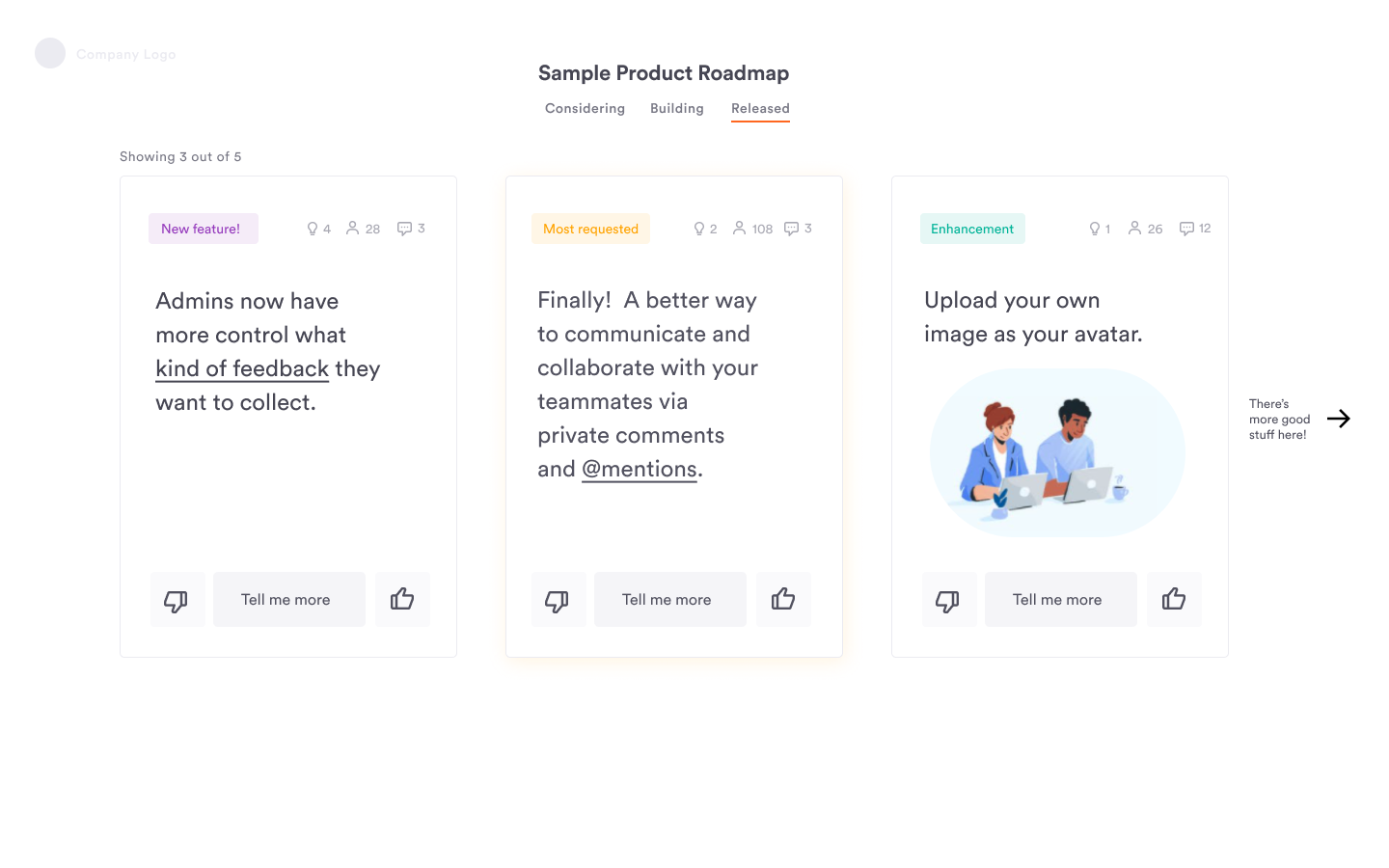
We continued brainstorming throughout our entire development process, using a combination of unstructured and structured processes, and it led to a revolutionary product.
I’ve found that giving yourself enough room to let your mind wander is crucial for creativity, and it’s one way to keep your team from developing the same features everyone else in your market is releasing. This less-structured approach is where innovation happens.
I personally try to read about new developments in topics that interest me—within the realm of product management and well outside of it. I’ve gotten ideas from email digests on data analysis and behavioral science, for instance. Staying too much within your own area of expertise or competitive market can limit your creativity; some of the best, most innovative ideas come from totally unique places. Ferrari’s famous logo reportedly came from an image painted on the plane of a WWI pilot.
Having a go-to method for recording your ideas is also helpful. I keep track of new ideas I’m interested in or new things I’ve learned that I may be able to apply to our product. I typically write simple notes on a document or jot them down on a whiteboard while I’m thinking them through.
Brainstorming requires creativity, which can be quite unpredictable. However, your team also needs a dependable way to work on new product feature ideas during your regular development cycles. Building a structured idea creation process that happens on a regular cadence offers you the reliability you need to iterate on your product.
If you’re not sure how to create a collaborative process your team can use, try an existing standardized method (there are many out there to choose from). Scrum is a good fit for many teams, and Google Venture’s (GV) design sprint is one of the most popular, but we suggest modifying its approach to validation.
At UserVoice, we follow a process that’s based on Basecamp’s Shape Up framework. Over the course of six weeks, we take rough ideas and turn them into released features for our product. This framework involves “shaping” the work, or turning a vague idea into something more actionable. Balance is the key to getting this part of the process right: we want to finish the ideation stage of Shape Up with a plan that’s defined enough for our engineers to understand what they’re building but loose enough for them to make changes where needed. Having that mix of clarity and flexibility supports our engineers as they work to ship each new feature within the six-week cycle.
We go through ideation at regular intervals in line with our development cycle. It’s a collaborative process involving myself, other product managers, product designers, our CEO, and our VP of engineering. We start out with a shared document of ideas—from myself and others on the team—that we review asynchronously. Then we meet for our whiteboarding session where we pitch our ideas, offer feedback, shape the work, and establish our plan for this cycle.
That cadence is what idea management provides.
Our last step is checking our work—validating the feasibility of the pitch and timeline with our product engineers and executive stakeholders and talking to users to prove our concept.
Ideation is difficult, and it’s not straightforward. Keep iterating until you establish a process that works for your team.
I suggest combining a structured approach with a way for solo brainstorming without too many guidelines or restrictions and then experimenting until you find an ideation method that sparks your creativity.
With a framework in place, you’re in a great position to get collaborative and come up with some great ideas.
Since your process includes solo brainstorming, you may go into development with a great idea ready to go. However, it’s important that, as a product manager, you’re able to believe strongly enough in your ideas to pitch them well without ignoring your team’s input.
Presentation also matters when it comes to the pitch. If your idea falls flat, it’s possible that the way you explained it didn’t get the full picture across to your team. In my experience, it can be difficult to get this balance right. I’ve had to learn when it’s time to move on from a pitch and when it’s time to reorient it and present it to my team in a different way. If you really believe in your idea, do it the service of pitching it well—but don’t let it derail your team’s progress in the process.
Try to be open to getting ideas from anyone—your direct reports, your supervisors, and people in other departments. Focus on giving helpful feedback to people who may feel uncomfortable sharing their ideas, and be sure you’re able to take feedback from others on your own pitches. If your team doesn’t go for your idea, it may not be the right time for it, or it’s just not a good fit for your product.
Building a collaborative team environment is beneficial for any structured brainstorming session, and constructive feedback is a crucial part of that environment. Each member of your ideation team needs to understand how to give and receive helpful critiques from their teammates; if this process isn’t constructive and collaborative, it can make people feel hesitant to share their ideas and shut down the group’s creativity. Everyone needs to participate and offer their honest reactions in order for your team to land on the best idea to develop.
Mastering constructive feedback isn’t always easy, and you may need to coach some of your team members in this area. Even offering a gentle reminder to speak up often (without dominating the conversation) can help bring all of your coworkers into the process.
Keep in mind that you’re all there to learn — about each other’s ideas, changes in your customers’ needs, or new developments in your market. None of you will walk into your ideation session with all of the answers figured out, so try to stay open to novel ideas and approaches. Lean on the expertise and creativity the rest of your team brings to the table—if you don’t feel like the smartest person in the room, that’s a great sign that your team is generating unique and innovative insights during an ideation session.
Creating a process for brainstorming gives you a structure to return to again and again. Just as we do with validation, we practice ideation continuously throughout our development cycle. Wrap it into your regularly scheduled process, for example, using the Shape Up framework, and build in freeform brainstorming opportunities you can do solo.
Ideation isn’t a simple, one-size-fits-all process, but don’t let that discourage you. Keep going until you land on a method that supports your creative method and gives you room to continuously innovate on your product.
Turn scattered user data into meaningful customer intelligence, guiding smarter decisions and creating a better product.
Talk to an Expert

